Blogs

Author: Sandi Schwartz

STOP DOING EVERYTHING FOR YOUR KIDS
When I was in college twenty years ago, I can recall going multiple days, maybe even up to a couple of weeks, without communicating with my parents. Sure, this was before cell phones, text messaging, and Facebook, but it just wasn’t necessary to talk to my parents that often. They gave me plenty of freedom to live my own life and to explore and grow during those incredible years as I blossomed into an independent adult. Somehow, I figured out how to register for classes, study, eat, do laundry, meet new friends, get over breakups, and handle bad grades all on my own. Nowadays high school graduates enter college as children, incapable of taking care of themselves. According to Julie LythcottHaims, author of How to Raise an Adult, overparenting and prolonged childhood are an epidemic in this country. As the Dean of Freshman at Stanford University for 10 years (one of best universities in the world), Julie Lythcott-Haims witnessed firsthand some disturbing trends of college students. Although they were more successful on paper than ever before, with pages of accolades such as awards, high test scores, leadership roles, varsity letters, overseas experiences, unique community service projects, etc., these students were also less familiar with who they were and their own goals and dreams. So many of them appeared to be robot-like, blindly following the directions of their parents to participate in certain activities and take classes that would land them acceptance letters from the finest institutions possible.So many of them appeared to be  robot-like, blindly following the  directions of their parents to participate in certain activities and take classes that would land them acceptance letters from the finest institutions possible.She also noticed that these kids couldn’t do much for themselves and still relied on Mom and Dad to help them. They were constantly on the phone with their parents asking for advice and requesting that they take care of basic tasks, such as registering them for classes, sending them special packages, advising them on their homework, and even contacting professors if they did not receive the perfect grade. How on earth will these young adults ever hold a job and function in the real world if they can’t take care of themselves during college? We hear a lot about how Gen Z is difficult to work with in the job market—self-entitled, narcissistic, lazy, and tough to manage.Lythcott-Haims makes it very clear: we have no one to blame but ourselves. The patterns that lead to this detrimental behavior start right now, even if your kids are in kindergarten. Are you one of these types of parents? Overprotective: You view the world as unsafe, scary, and unpredictable, so you do everything possible to protect your children instead of preparing them to learn how to handle life’s challenges themselves. Tiger parent: You provide fierce direction to your kids, telling them that you know what’s best for them to achieve success in this world. Excessive hand-holder: You do everything for your kids to make life as pleasant as possible for them. You are their concierge, chauffeur, handler, scheduler, and secretary. These helicopter parenting styles are impeding our children. So many parents today feel like their kids can’t be successful without them helping at every turn and hovering over them. They spend so much time planning, protecting, directing, and nagging that they are ultimately stunting their children’s growth. We are taking away the ability for our children to learn self-efficacy, says Lythcott-Haims. This incredibly important skill is a fundamental aspect of the human psyche. It is when individuals realize that their own actions lead to outcomes, that they have the power to direct their own lives. “If our children are to build self-efficacy, then they need to do more of the thinking, planning, deciding, hoping, coping, trial and error, dreaming, and experiencing life for themselves. We may ensure some short-term goals by over-helping, but it comes as a long-term cost to their sense of self. We should be more concerned that they have the habits, skillset, mindset, and wellness to be successful no matter what their future holds,” she announces. This is worrisome because we all want our children to be able to function without us, to fulfill their dreams and live happy, healthy, successful lives. Listening to her presentation really opened my eyes. So, how can we stop doing everything for our kids? Here are some steps to get started on this whole new parenting perspective.Stop Making Everything About You Many parents try to live through their children because they are unsatisfied with their own childhood. They may even refer to their child’s grades and activities as “ours.” Learn to separate what’s yours from what’s theirs. We also have to stop trying to mold our kids into something they are not. We will all be much better off if we love our children for who they are and support them. Teach Them New Skills The only way our children will learn to do things for themselves is if we provide opportunities for them to learn new skills. This starts during pre-school when we ask our children to dress themselves and use a fork properly. With each new year, there are so many chances to help develop their skillset. The best way to teach our kids a new skill is to: Do it for themDo it with themWatch them do it on their own Let them do it on their own.Wouldn’t you rather gradually teach your kids and not have to cram everything in on the way to college move-in day? Let Them Fend for Themselves and Learn from Their Mistakes It is so important that our children learn how to speak up for themselves and communicate with authority figures and peers alike. We have to stop trying to clean up all their messes for them and protect them from failure. The only way they will grow is if they make mistakes and learn how to handle them. Give Your Kids Experiences Even if it is totally out of your comfort zone, try to let your kids experience activities without you that will help them build self confidence and independence. Sleepovers, all-day sports or other competitions, camping trips, and sleep-away camp are some good examples. Last summer my son went off to sleep-away camp for four weeks, and it was very difficult for me. I cried for days worrying about him. But you know what? When I saw him on visiting day, I was blown away by how happy he was and how mature he acted. I was petrified that he would pick up bad habits and become a rotten kid, but the opposite happened—he became an even more amazing version of himself.   By adjusting some of our parenting techniques now, we can better prepare our kids for a successful life ahead of them. 
Read More

RAISING POLITE AND KIND KIDS
Have you noticed that kids these days do not have the best manners? When I volunteer at my daughter’s school at lunch time, I rarely hear the children saying please and thank you, although they are certainly not shy about requesting more ketchup or cheese for their plate. Sometimes I like to give them a manners nudge by serenading them with the phrase “more cheese please?”My husband and I have always made teaching manners to our children a priority in our house. While we do not expect to flash back to the 1950s and have our children address every adult they meet as Mrs. or Sir, we do ask that they say please, thank you, and excuse me. Sure, it takes quite a bit of training (and sometimes nagging as well) from the time they speak their first word, but we know that having good manners will help them be kinder, nicer, more successful people throughout their lives. Reason for This TrendA 2016 survey by the Associated Press-NORC Center for Public Affairs found that 74 percent of Americans think manners and behavior have deteriorated in the United States over the past several decades. Interestingly, clear differences between what older Americans and younger Americans consider to be rude behavior were revealed in the study. For example, almost half of Americans age 18 to 29 think it is perfectly acceptable to use cell phones in restaurants, while only 22 percent of those over age 60 agree. This discrepancy indicates a clear trend in how manners and rudeness have changed over generations. What is the reason for this change? Experts blame technology and busy parents for this trend. When both parents work long hours and children are raised by other caregivers, like nannies and daycare or after-school staff, they do not receive the same guidance and skills to help them form good manners. It also seems to be widely accepted that teachers do not need to be responsible for giving lessons about manners. That means it’s up to parents to instill these values with the limited time they have with their children. Also, many parents feel guilty about all the time they spend at work, so they try to act like their children’s best friend instead of their disciplinarian. Second, technology gets blamed a lot for kids’ lack of politeness. According to Alex J. Packer, PhD, author of the book How Rude! The Teen Guide to Good Manners, Proper Behavior, and Not Grossing People Out, today’s electronic devices and social media lead to a culture of rudeness. Communicating in brief snippets with texts and tweets can distort the intended meaning of words and can cause bad manners. Spending so much time on devices also pulls kids away from personal interaction with their peers and adults. This means they are not practicing how to speak to others kindly. Finally, when kids communicate through electronics, they have more freedom to be rude since they can be anonymous and removed from the situation.   Why Good Manners Are ImportantIf it’s becoming widely accepted that manners no longer matter, then why should we care whether our kids have good manners at all? Just because everyone’s doing it doesn’t mean we should follow the downward trend. Good manners are still critical to a child’s successful growth and their ability to build positive relationships throughout their lives. At the core, good manners reflect respect for ourselves and others. When we say please and thank you, we are taking the time to make someone else feel appreciated. Additionally, Dr. Pier Massimo Forni, professor and co-founder of the Civility Project at Johns Hopkins and author of Choosing Civility: The 25 Rules of Considerate Conduct, explains that it is crucial for children to learn to connect civility with strength and determination. This is achieved through character development in the home, and these positive traits can be applied to other situations in their lives. Our children depend on us to show them how to be trustworthy, considerate, and kind to others so that they can take these skills with them throughout school, the workplace, and in their relationships.  How to Teach Children Good MannersIt’s never too early to teach your children good manners, but you may reach a point when it becomes a major struggle if you wait too long. One etiquette expert suggests teaching kids the basics of good manners by the time they reach eight or nine years old when they completely understand what respect means. Some of the main concepts to teach your children include:Using nice wordsTeach them how to say magic words like please when they ask for something and thank you when they receive something. It is also important that they learn to say they are sorry and “excuse me” when appropriate. Bottom line—they should try to be as kind as possible to others and treat them as they would want to be treated. Meal-time etiquetteWork with your children to develop appropriate behavior during meals and special occasions, such as doing the following:Put away electronics.Wait until everyone is seated and served before eating.Use your utensils and your napkin.Take small bites.Chew with your mouth closed. Don't talk with your mouth full.Keep your elbows off the table.Don't pick food out of your teeth in public.Interpersonal connectionGive them the skills to be able to communicate and connect with others. Some guidelines include:Not interrupting others while they are talking.Speaking in complete sentences instead of one-word answers.Give full attention to someone talking to them, which includes looking them in the eye. Be sure to smile to appear inviting and interested in what others have to say. If comfortable, shake hands or hug the person.Good sportsmanshipTeach your children to lose gracefully and to always thank their opponent at the end of a game. By focusing on the positive aspects of sports and games, like taking turns, learning new skills, playing as a team, and reaching their goals, there will be fewer bad manners when they lose. You don’t need to invest hundreds of dollars in an etiquette class for your little one like some parents are doing; you really can do this yourself. It’s all about being consistent and modeling the positive behavior. Be mindful of using kind words when you speak to your children and other people, like servers in restaurants. If you repeatedly say please and thank you to them, they will start mimicking your language. You can also use some fun, creative ways to instill good manners in your children.Ask them to write real thank-you notes after they receive gifts. Create a charades-like game by teaching them signals when they need to use better manners, such as tapping the corner of your mouth when they should to use a napkin or putting your pointer finger up to your lips when they need to stop talking and give someone else a turn. Make a good-manners collage by cutting out words and images that can be hung up as a reminder.Read books about manners, such as Manners, May I Please Have a Cookie?, My Mouth Is a Volcano!, The Thank You Book (An Elephant and Piggie Book), Penguin Says "Please", Richard Scarry's Please and Thank You Book, Excuse Me: A Little Book of Manners, Manners Time
Read More
HELPING KIDS THRIVE BEYOND SCREENS
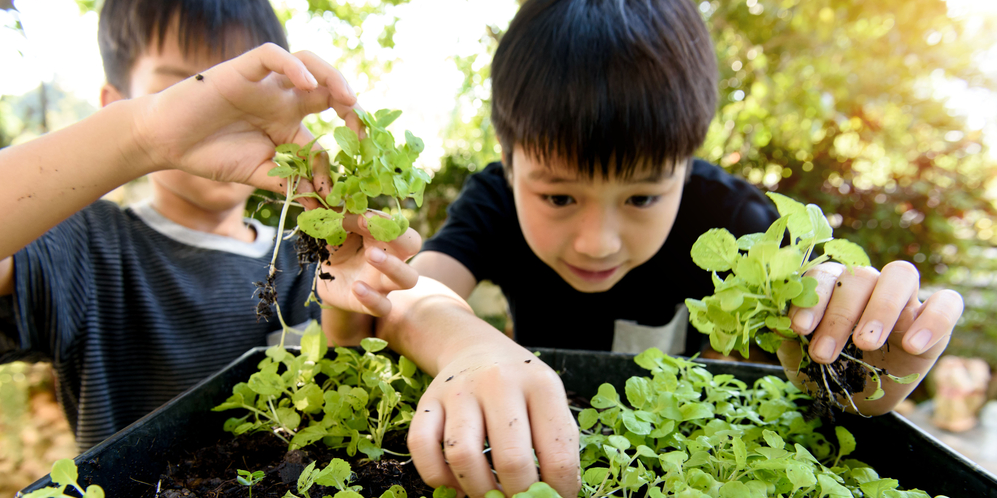
Kids today are spending an exorbitant amount of time glued to their electronics. A survey published by Common Sense Media found that nearly all children aged 8 and under live in a home with some type of mobile device and spend an average of 2.25 hours a day on screens. This media time only increases with age—tweens use an average of 6 hours, not including time spent using media for school and homework, and teens are up to an average of 9 hours daily. Being tied to phones, tablets, and computers takes away from handson learning time, which is unfortunate since these types of experiences provide so many critical benefits to children as they grow and develop. As media becomes the go-to teaching tool in classrooms, it is imperative that we find fun and creative ways for kids to experience more hands-on, interactive learning opportunities at home. First, let’s dive into five key benefits of hands-on educational experiences for children. Enhances Learning When children are primarily learning by reading, listening, and watching, they miss out on a key component of the educational experience that can only happen by doing. Kids of all ages thrive when they are provided with interactive, engaging, meaningful educational experiences. According to Brookings Institution, students who are engaged in hands-on learning are much more likely to remember what they were taught. Interestingly, when children are physically engaged in an activity, they process the information differently and learn more effectively. Simply reading about a concept in a textbook or watching a demonstration in class is just not the same as physically experiencing what you are learning about. A research study from the University of Chicago measured this concept using brain scans and found that students who engaged in a hands-on approach to learning scientific concepts were more activated in the sensory and motor-related parts of their brain. This also led to better quiz scores. Stimulates Curiosity When children are part of something so fascinating that it fills them with awe, like a science experiment or art project, they get excited about it and want to learn more. Hands-on experiences like these can spur curiosity in children, which is so critical to their growth and success. Even though their constant questions may be exhausting for us at times, their curiosity is exactly what we want to see from them so that they continue to crave and seek out new knowledge. “One of our most important jobs as parents is to nurture kids’ innate curiosity. Not only is curiosity linked to academic achievement, it is tied to happiness in the long-term as well,” says Sandy Polu, PhD, founder of plumsparkkids.com, a creative learning subscription box for kids. “The key is to encourage curiosity in a way that is relevant and appropriate for the child.” Improves Social Interaction Part of the problem with all of this technology is that kids are losing the ability to communicate and interact with others in person. When they hide behind their devices instead of talking face to face with their friends and family, they miss out on a major chance for emotional connection. According to Psychology Today, this kind of communication interferes with actual conversation and undermines our ability to connect with others. As children are constantly exposed to these quick and impersonal ways of expressing themselves, they miss out on learning how to accurately convey their thoughts and feelings. When we engage our children in fun hands-on activities, it opens a whole new world to them in which they need to ask questions, explain directions, and talk to others about the project. These projects also provide a special bonding time for parents and children or siblings to take on a challenge and work together. Whether it’s baking in the kitchen, working on a garden, or conducting a science experiment, kids will learn so many important social skills from the experience. These types of projects are also a great opportunity to invite over some neighbors or friends for a playdate so that the kids can work on a creative project together instead of staring at screens. Expands Creativity It’s one thing to observe art in a museum or watch a building being constructed in a video, but it’s another thing for kids to actually create masterpieces with their own hands. These types of activities allow children to tap into their own creativity and explore as they go. It gives them a direct sensory experience, which offers a more in-depth way of learning about a subject. It also provides a chance to stretch their imagination as much as possible.  Boosts Confidence When a child has the opportunity to directly work on a project, such as a science experiment, from start to finish, they can feel a sense of accomplishment when they see the results. They then become empowered, which leads to more confidence when they face the next challenge. They also learn from their mistakes and failures, which only makes them more resilient in the future. If the experiment does not come out as planned, they will learn to ask why and make adjustments the next time they work on it. Finally, the encouragement they will get from accomplishing a hands-on project will increase their self-esteem, which will seep into all aspects of their life, such as sports, school work, and relationships. Fun Hands-on Learning Ideas for Kids There are a number of ways for us to share hands-on learning experiences with children of all ages. Science experimentsWorking on science experiments is one of the best ways for kids to get excited about STEM in a hands-on manner. By working together on the experiments, your children will have the chance to get creative, follow directions, work with new science tools, challenge themselves to learn something new, and have fun being fascinated by science.  [[image1]]Polu believes that doing science experiments at home is a great way to demonstrate that science is all around us. “A good experiment shows kids that science is fundamentally about understanding the world we live in—whether it’s figuring out fun concepts like why milk chocolate melts in our hands or testing which sunblock works the best.” GardeningWorking on a family garden together is another great way for children to grab some hands-on learning. By getting their hands dirty—literally—they learn to appreciate nature, hard work, and where the food we eat comes from. Because they play a direct role in growing the fruits and vegetables that they see with their own eyes, touch with their own hands, and taste with their own mouths, they are filled with accomplishment and joy. Arts and CraftsArt projects are one of the easiest ways for children to experience tactile learning. Yes, they can color on an iPad by swiping their finger from side to side, but that does not compare to actually holding a crayon in their hands and using different types of pressure to transfer colors onto the paper. Arts and crafts help stimulate a child’s creativity and imagination that can’t be replicated by any electronic program.    Baking/CookingInviting the kids into the kitchen to help cook a meal or bake some treats can be a wonderful hands-on learning experience for them. Preparing a meal involves choosing a recipe, following directions, tracking time, measuring, and even working on simple math equations. Kids also have the chance to touch and feel the different ingredients. Although there are apps for baking cookies and making ice cream sundaes, nothing beats whipping up a delicious treat with your own hands! 
Read More